Colorado Case Study
The Problem
Colorado family services are state-supervised and county-administered, which means that policy and practice are set at the state level by the Colorado Department of Human Services, but 64 counties are tasked with carrying out child welfare casework on the local level. That means 64 varying types of technology, staff levels, and resources. Even though Colorado's state analytics teams work well with data savvy county partners, there is often a disconnect between the data produced by the state and counties because data was pulled directly from a transactional database.
In addition, there was no oversight governing how data was processed. Two people answering the same questions, such as from the state and county or two different counties, might come up with significantly different answers depending on their own data analysis. At the same time, there was a large movement towards continuous quality improvement as a result of a performance improvement plan put in place by federal oversight agencies.

The Solution
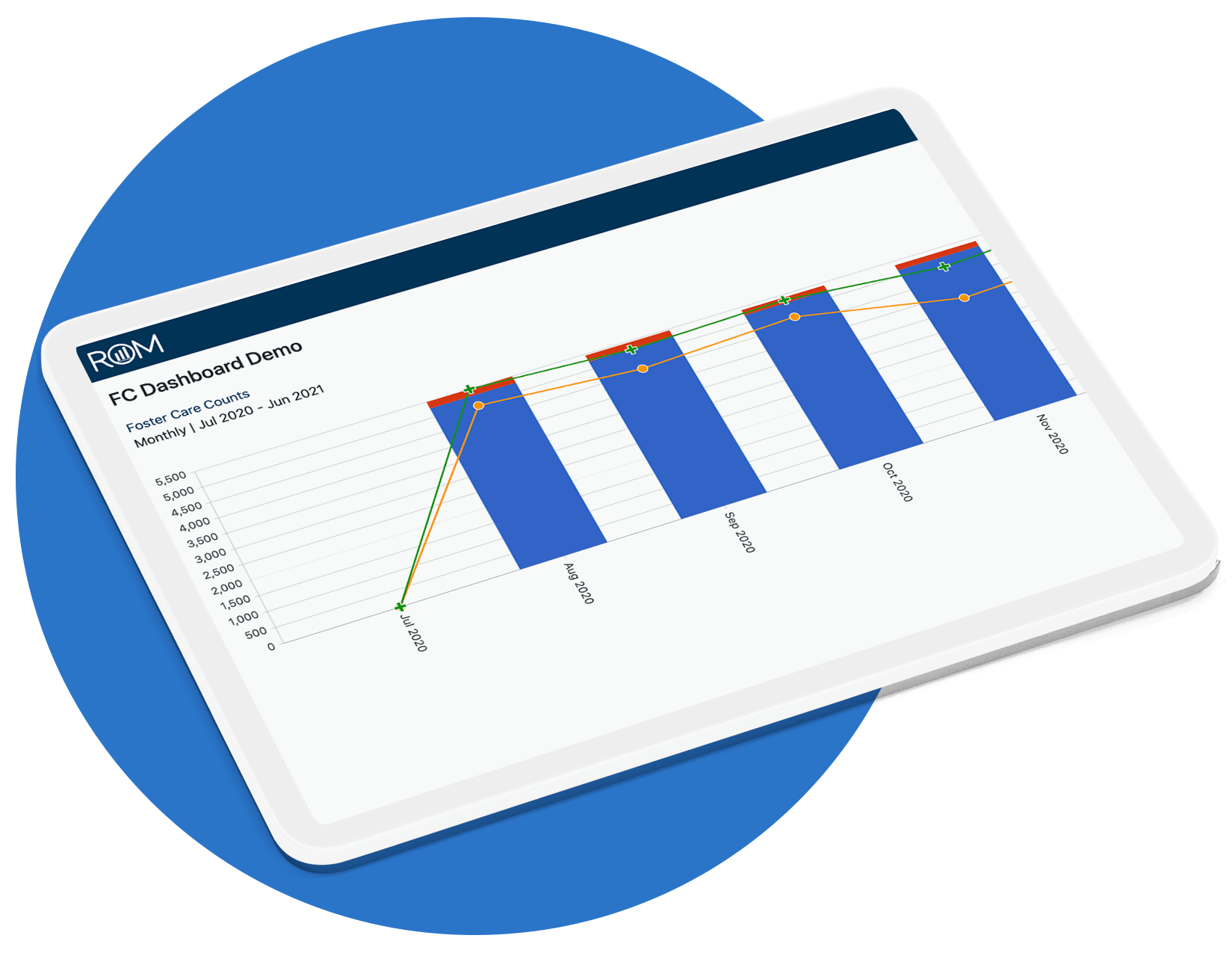
When ROM was introduced as a reporting solution partner, both county and state staff helped map data from Colorado's case management system to the ROM base working tables. County data analysts gave input for building the custom system. This partnership helped the counties to embrace ROM even though it was a state-initiated data reporting effort.
The state and counties worked together to develop and define common performance measures to address the performance improvement plan. Each county integrated the ROM system into its business processes, building custom reports and adding as many users as needed. ROM soon became a single source for outcome and data measurements for all 64 counties, plus the state agency.
The Outcome
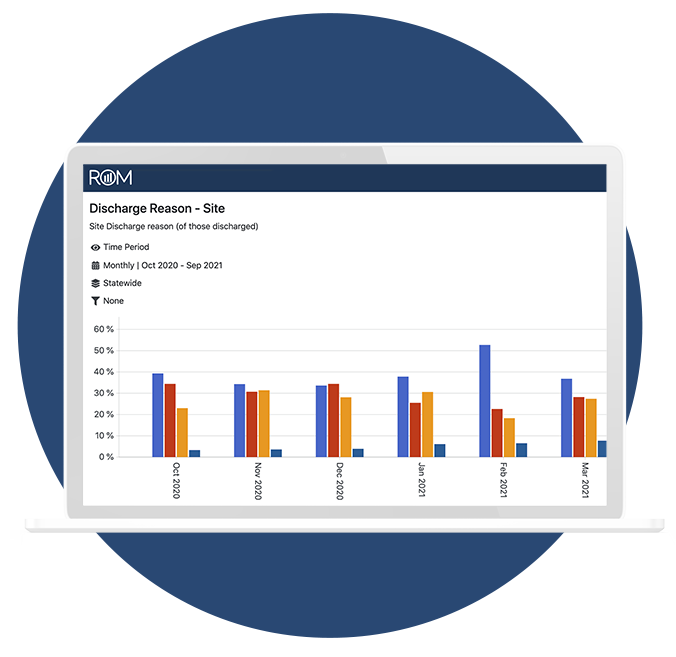
In 2021, there were almost 400 active users in the ROM secure site. Having ROM in place was instrumental for helping counties trust the data provided by the state. Additionally, the reporting and analytics provided by ROM technology was empowered a stronger county and state partnership.
The ROM system also enables the public launch of a performance management system called C-Stat, made for tracking metrics across all 64 offices. Indicators like the time to permanency, lead time before counties act upon a report, child abuse or neglect referrals, and other accountability measures became publicly available for media and anyone interested in the data, reducing the amount of open records requests filed. In one year, the transparency site hosted 4,565 unique visits.
Colorado has made the most use of ROM's flexibility and tailor-made reporting functions, with 25 custom reports, the highest number of any of ROM's partners. Counties are invested with the ROM system because it provides accessibility and reduces their burden. ROM, CDHS, and counties regularly hold workshops for troubleshooting and reporting best practices.
Because of ROM's comprehensive, accurate, and reliable data, Colorado uses it for large analytic projects such as evaluating risk of re-entry and risk of aging out of the system. The validated longitudinal reporting data provided by ROM data has proven itself valuable for guiding and informing policy and best practices.
ROM Services Provided
- Customized Database
- API
- User Interface
- Networking & Sharing Best Practices
- Training & Consultation
- Testing & Staging Environment